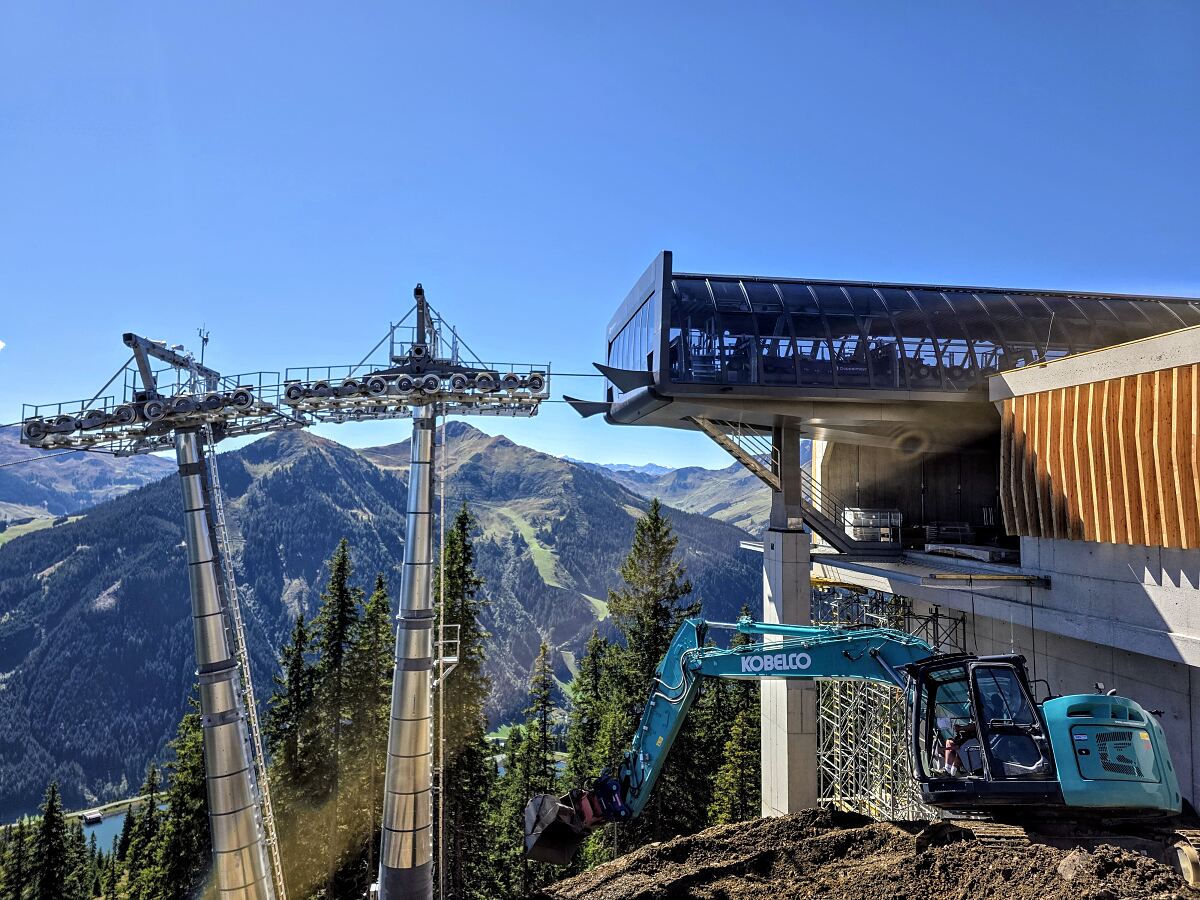
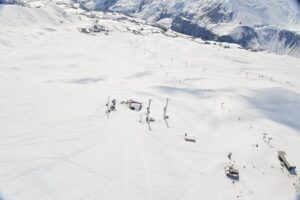
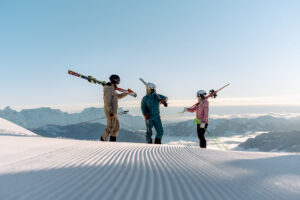
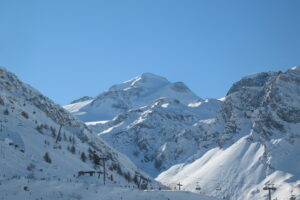
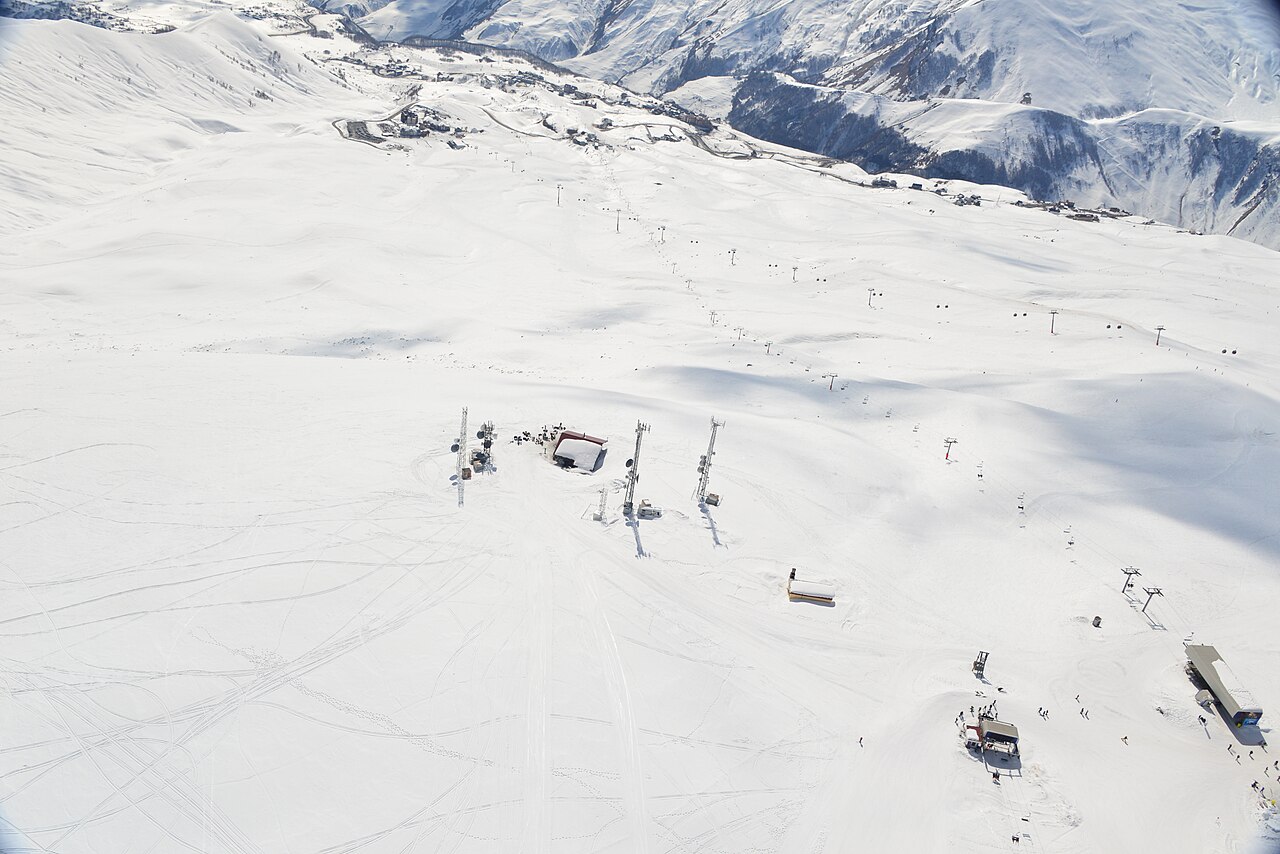
Gudauri’s slopes beneath the Caucasus mountains. Photo: Андрей Бобровский / CC BY 3.0.
Georgia’s case for a ski holiday starts with a striking combination: high Caucasus mountains, substantial investment in lifts and a reputation for modest ski pass prices. For winter 2026/27, the Mountain Trails Agency (MTA) has announced an official season opening on 20 December in Gudauri, Bakuriani, Goderdzi and Mestia. Beyond that headline lies a more interesting question: how much skiing can a visitor get for their money?
The answer depends on choosing the right resort and travel dates. Georgia offers several different mountain experiences, rather than one interchangeable national ski area. Its appeal deserves a closer look, especially for skiers seeking an alternative to the familiar Alpine holiday.
Four gateways to the Caucasus
Gudauri is the natural starting point for many international visitors. Set in the Greater Caucasus, about 120 kilometres from Tbilisi, it combines open mountain terrain with a comparatively straightforward city-and-ski itinerary. MTA’s resort catalogue lists 21 lifts and a top elevation of 3,276 metres. These are the dimensions of an established ski destination, with a history reaching back to its first lift in 1988.
Bakuriani, in the Lesser Caucasus, has a different character: coniferous forests, ski schools and three MTA ski areas, Didveli, Kokhta and Mitarbi. The operator lists 36 kilometres of terrain and 12 lifts. Families and learners have a reason to consider it beyond price alone.
In Svaneti, Mestia is the base for Hatsvali and Tetnuldi, combining skiing with the region’s distinctive tower-house landscape and local food. Farther southwest, Goderdzi offers a smaller mountain-Adjara experience, with wooded scenery and snowfall influenced by moisture from the Black Sea. These places reward different itineraries; they are not sectors of one continuously connected circuit.
A December-to-April season, with important differences
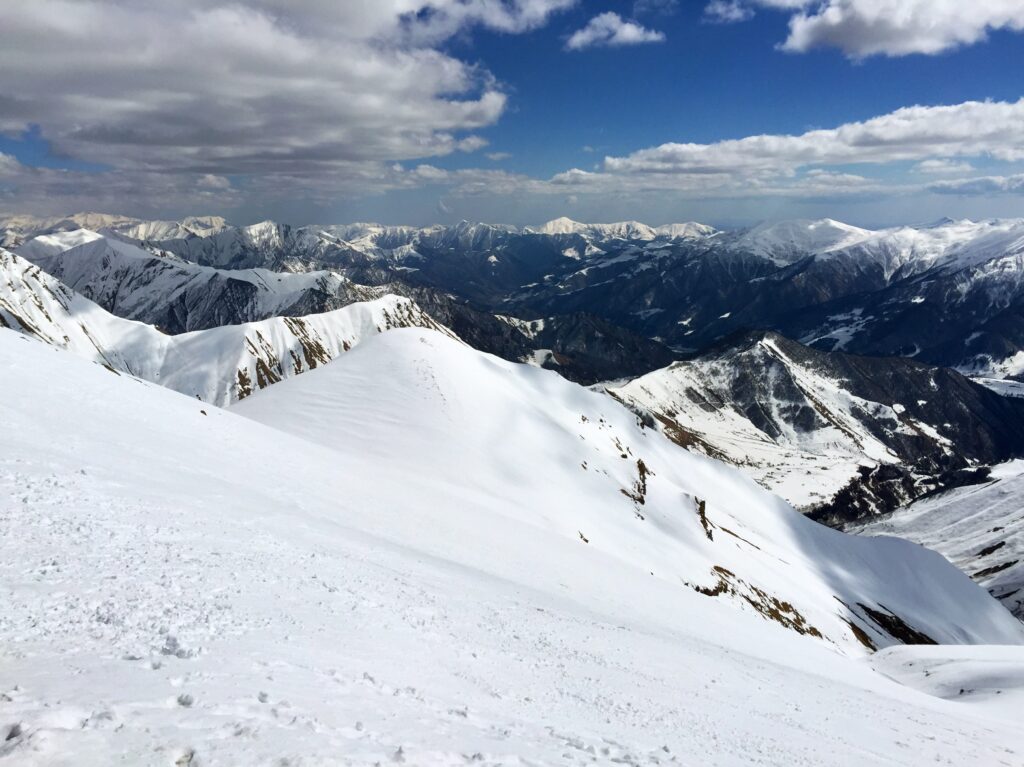
The 20 December announcement provides a planning milestone for 2026/27, rather than a promise that every lift and piste will open simultaneously. It does not specify a final closing date. Travellers should distinguish the official launch from the operational status of the particular mountain they intend to ski.
The national tourism administration describes Gudauri’s typical season as December to mid-April, with northern slopes retaining snow quality longer. MTA similarly gives Gudauri and Mestia a December–April reference season. Its Bakuriani catalogue indicates December–March. Goderdzi’s own page gives differing general descriptions, so an April visit there needs direct confirmation rather than an assumed national timetable.
Altitude helps explain Georgia’s spring appeal, but it cannot remove weather-related disruption. Midwinter and spring also offer different holidays: shorter, colder days versus longer daylight and changing snow through the day. For a trip built around maximum skiing, book against confirmed operations and conditions, rather than treating an attractive late-season photograph as a guarantee.
Modern infrastructure, and more investment for 2026/27
Low prices need not mean a landscape served entirely by old lifts. Gudauri’s catalogue includes gondolas and chairlifts, while manufacturer Doppelmayr’s account of its Georgian projects documents the resort’s continuing expansion. Lift technology is one part of the story; piste preparation, snowmaking and how comfortably a visitor moves around the resort matter too.
MTA’s September infrastructure announcement details artificial snowmaking over 7.5 kilometres on Soliko and Kikilo, replacement of the old Khada and Snowpark lifts with two T-bars, and a 200-metre covered moving carpet. Night lighting is also planned for New Goodaura.
Two additional runs, Tatra 3 and Kobi 3, are intended to add six kilometres, taking Gudauri’s advertised total to 86 kilometres. The projects are scheduled for completion in December 2026. That distinction matters: the enlarged figure is a development target, not confirmation that every new kilometre is already available. For a visitor, the useful question is which improvements will serve their chosen accommodation and preferred terrain, rather than simply how much the national network has grown.
Ski pass prices: a 2025/26 benchmark
Last winter’s prices provide a useful starting point for understanding Georgia’s appeal. The Georgian Guide reports the following adult day-pass rates for 2025/26, in Georgian lari (GEL): Gudauri, 70 GEL (about €24); Bakuriani, 55 GEL (about €19); Mestia, 50 GEL (about €17); and Goderdzi, 30 GEL (about €10).
Euro equivalents are rounded estimates using the official rate displayed by Georgia’s State Treasury on 6 November 2026: €1 = 2.8998 GEL. They translate the historical prices for comparison; card and cash exchange rates may differ.
These previous-season figures put a concrete price on the skiing, rather than relying on a general reputation for affordability. They also show why choosing a resort matters: Goderdzi’s smaller area and Gudauri’s larger network offer different holidays. A complete official 2026/27 day-pass tariff had not been verified on 7 November, so the figures above are a historical benchmark, not this winter’s confirmed rates.
MTA’s January 2026 ticket guidance explains the practical details of last winter’s system. Day passes did not include night skiing, a physical Multicard was required at the gates, and the card could be reused. When comparing tickets, check the applicable duration, resort coverage, age category and additional fees, alongside the headline price.
An appealing alternative to the Alps
There is a credible value proposition to investigate: high-altitude terrain and investment in infrastructure, alongside historically modest ticket prices. But neither the cheapest pass nor a large piste total establishes the best holiday value. A smaller area can suit a beginner perfectly while leaving a mileage-focused expert wanting more.
Georgia’s combination of mountain scenery, developing infrastructure and modest historical ticket prices makes it a compelling destination to compare with the Alps. A useful comparison adds flights, baggage, transfers, accommodation, equipment and lessons, then considers how many suitable ski days the itinerary can realistically deliver. Use the exchange rate at booking for your final budget; the euro figures here are an indicative comparison.
What this means for your trip
Start with Gudauri for an accessible introduction to Caucasus skiing, Bakuriani for its family-oriented setting, or Mestia and Goderdzi when their landscapes are central to the holiday. Georgia merits a place on a value-conscious skier’s shortlist. Before committing, confirm the 2026/27 ticket price and the operations for your dates: the strongest bargain is a mountain holiday that delivers the skiing you came for.