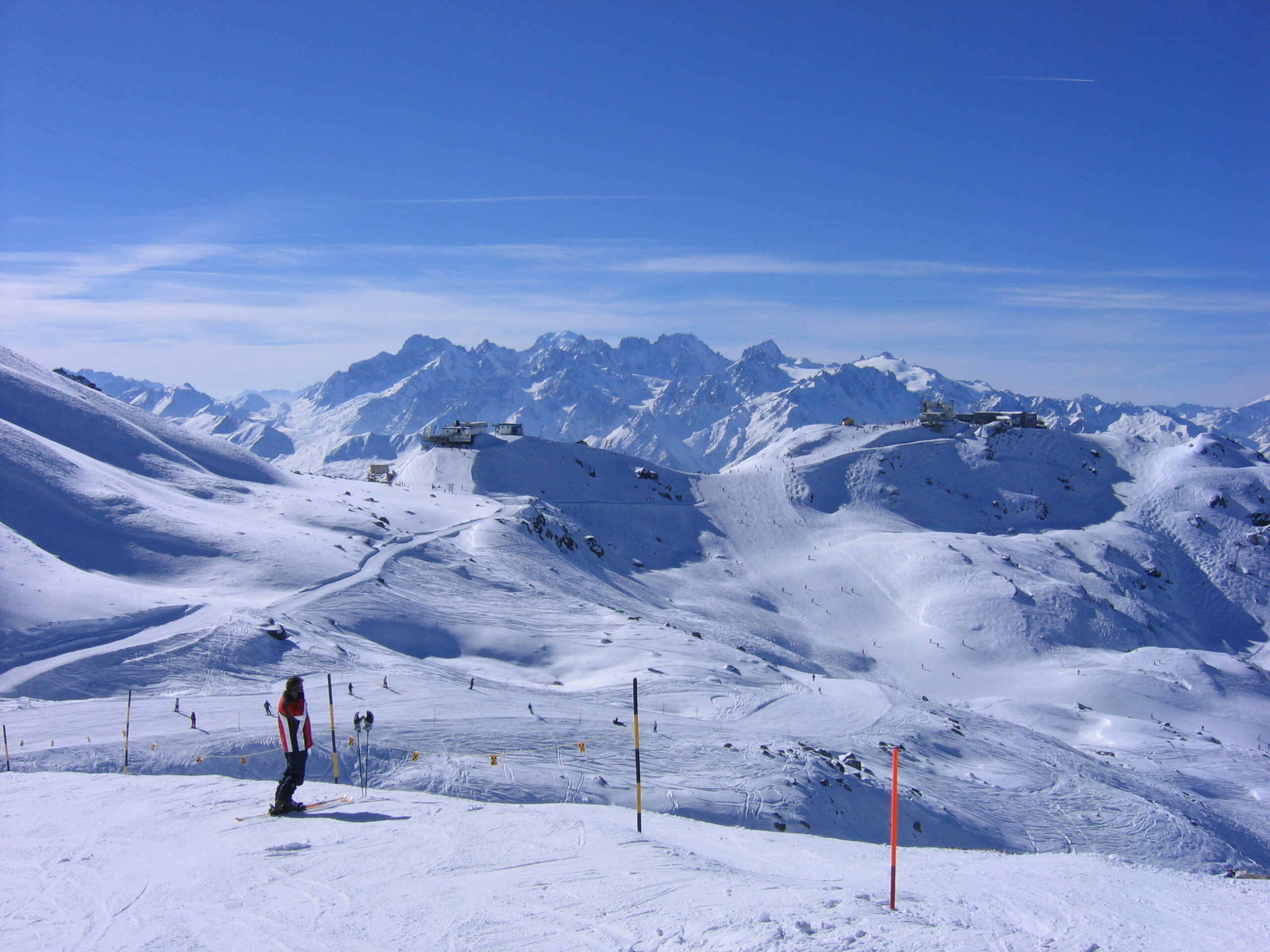
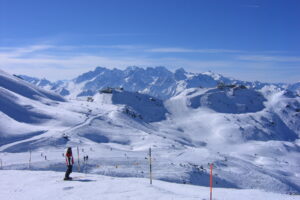
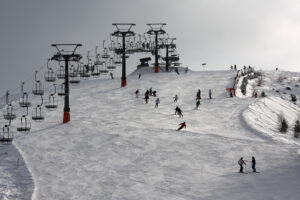
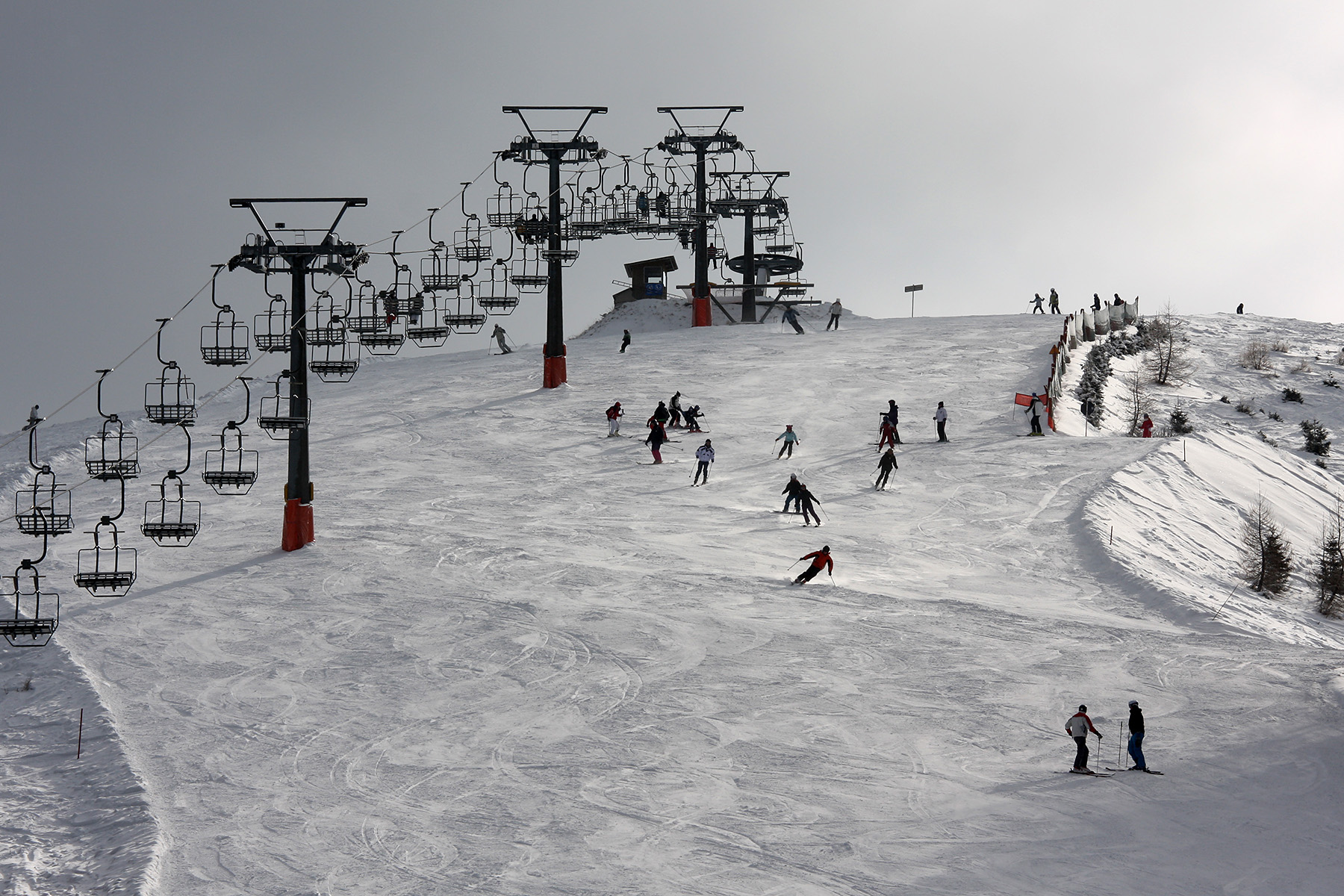
Skiing in Folgaria, part of the wider I Grandi Altipiani pass. Photo: Roberto Ferrari / CC BY-SA 2.0.
Asiago’s winter ski pass presale offers a choice between staying on the plateau and exploring a wider corner of northern Italy. For 2026/27, the adult “Sciare – L’Altopiano di Asiago” season pass costs €430 in advance, while “Sciare – I Grandi Altipiani” costs €590. The promotional purchase deadline is 8 December 2026.
Behind those prices is a destination with a distinctive personality: wooded slopes, broad upland scenery and several separate ski stations rather than one enormous mountain circuit. An Asiago holiday can combine downhill skiing with the plateau’s Nordic traditions, food and history. Understanding that geography is the key to choosing between the two passes.
Two season passes, with different reach
The 5 November announcement from Ski Verena includes Verena 2000, Melette 2000, Kaberlaba, Biancoia and Larici–Valformica in the Asiago offering. The wider product adds the Alpe Cimbra areas of Folgaria, Lavarone and Fiorentini. It is a choice of where to ski across the season, with journeys between separate bases.
The Asiago-only tariff lists adult presale at €430 against a standard €460, a €30 saving. Young people born from 2009 to 2018 pay €310 instead of €340; children born in 2019 or later pay €210 instead of €230. Seniors born in 1961 or earlier are listed at €360 in presale and €390 at the standard rate.
The I Grandi Altipiani tariff puts the adult presale at €590 against €670, saving €80. Its corresponding youth prices are €420 and €470, and children’s prices €250 and €290. All figures here concern season passes, not one-day tickets. The wider adult presale costs €160 more than the plateau-only version.
Compare those sums with the number of days and areas you will actually use. A visitor staying for one short holiday should also price the relevant daily or multi-day products rather than assuming that a season pass is automatically the economical choice.
Where the Asiago Plateau lies
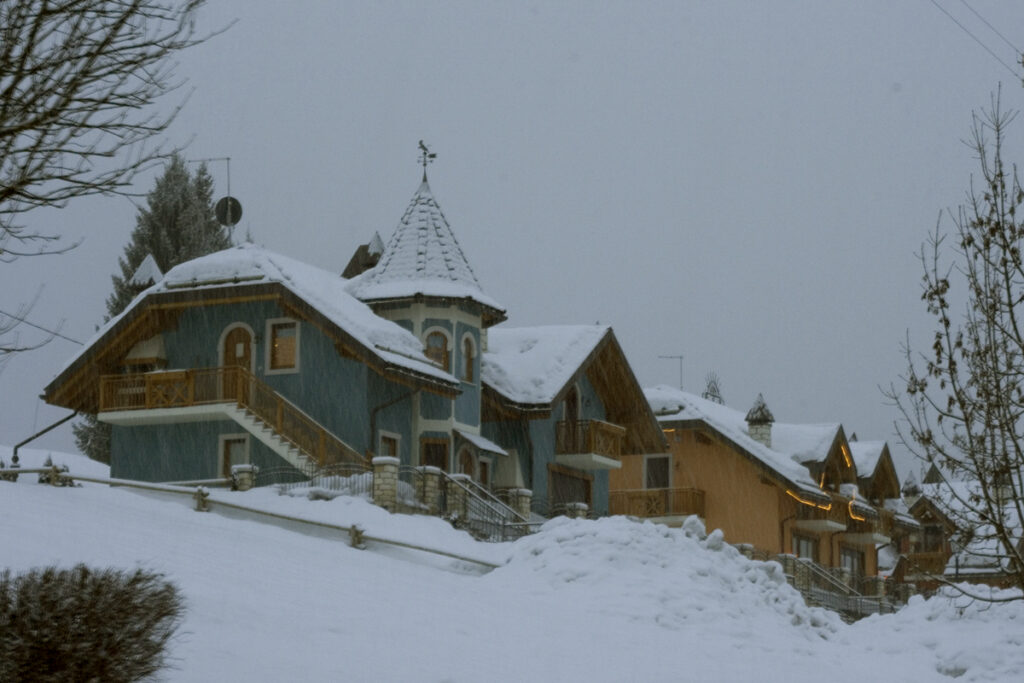
The Altopiano di Asiago, also known as the Sette Comuni plateau, is in Veneto’s Vicentine Prealps. Asiago is the best-known town, with Gallio and Roana among the surrounding mountain communities. The landscape has a different rhythm from a steep-sided, high-glacier resort: settlements, forest, open meadows and ski slopes are spread across an upland region.
Italy’s national tourism portal describes a destination combining nature, sport, culture and wellness. It also notes Asiago’s rebuilding after the First World War and its importance for cross-country skiing. Those associations explain why the area rewards time away from the downhill lifts as well as time on them.
Choose accommodation with the intended ski base in mind. Being in Asiago town is not the same as stepping directly onto every participating station’s pistes. For a family, the balance between town facilities, lesson meeting points and the daily transfer can matter more than a small difference in the pass price.
Verena and Le Melette: the principal downhill anchors
Verena 2000 advertises 15 kilometres of pistes and three chairlifts, including the six-seat Forte Verena lift. Its slopes offer different difficulty levels, with ski-school and rental services supporting visitors who want to keep the day concentrated around one base. The mountain’s wooded setting and higher outlook are part of its appeal, rather than sheer network size.
The wider mountain carries a historical identity too. Forte Verena is a landmark associated with the First World War. Its presence adds context to the mountain landscape, although a historical point of interest should not be confused with a winter sightseeing route guaranteed to be accessible on any chosen day.
At Gallio, Le Melette’s operator describes around 20 kilometres of pistes, terrain roughly between 1,400 and 1,750 metres, and a location less than 10 kilometres from Asiago. The offer includes easier skiing as well as black runs, renewed lifts, snowmaking and mountain huts. It is substantial enough to form the centre of a day without being presented as a giant Alpine domain.
Published kilometre totals can differ between tourism listings and operator descriptions. The figures above follow the individual operators and describe separate stations. Adding them together does not produce a continuously linked ski circuit, nor does it establish how much terrain will be open on your travel dates.
What the wider Alpe Cimbra option adds
For skiers prepared to travel farther, the wider pass brings the Folgaria–Lavarone offering into the plan. Alpe Cimbra advertises 104 kilometres across 66 pistes. This is the combined destination figure for Folgaria and Lavarone, not an additional 104 kilometres at each station.
The attraction is variety across a winter: a familiar local slope on one visit, a larger day’s exploration on another. The tourism organisation’s skiing guide describes blue, red and black terrain, including recognised training slopes. It is a broader proposition than simply buying access to the nearest lift.
However, a common ticket does not remove the travel between ski areas. Allow time for moving between bases and plan a sensible day in one area, rather than expecting to ski from Asiago to Folgaria through an unbroken chain of slopes.
A plateau holiday beyond downhill skiing
Asiago’s Nordic identity is a significant part of what sets it apart. Cross-country skiing offers another way to experience the woodland and open plateau, while snow walks can suit companions whose holiday is not built around downhill mileage. These activities have their own facilities and access conditions; the downhill season pass should not be assumed to include them.
The name Asiago is also tied to its protected-designation cheese, highlighted by the national tourism organisation. Local food gives a lunch stop or town evening a sense of place. Together with the region’s wartime history and mountain communities, it makes the destination more than a collection of lift installations.
What this means for your trip
Buy the €430 presale if the participating Asiago stations match your winter plans; consider the €590 option if you will genuinely use Alpe Cimbra too. The operator’s conditions state validity up to 30 April 2027 for participating lifts in service, which does not guarantee that every station stays open until that date. A €5 card deposit may apply, and issued passes cannot be converted into another product. Check eligibility, collection arrangements and operating dates before the 8 December deadline, then choose the pass around the skiing you intend to do.