


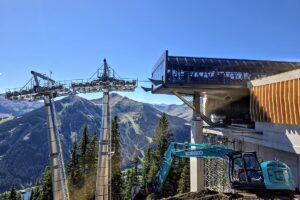
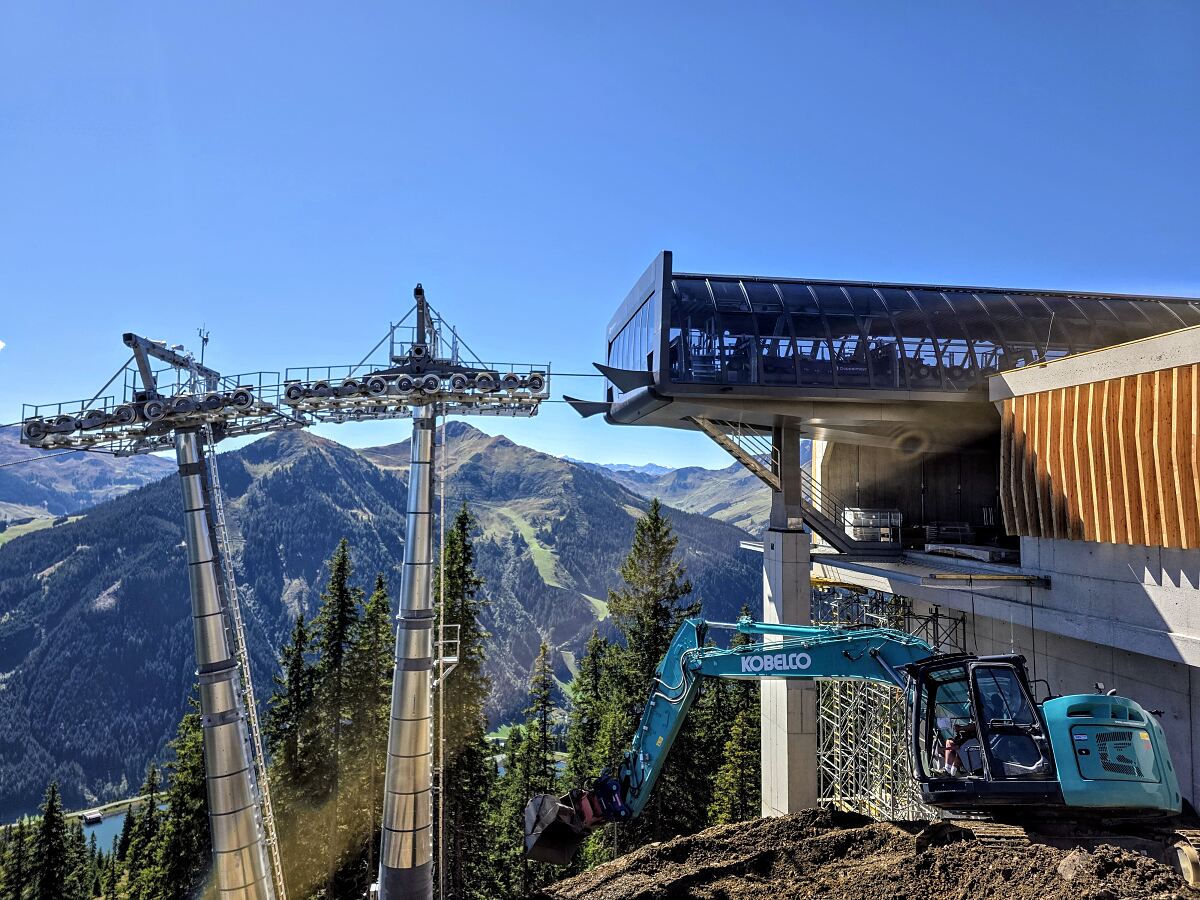
New Reiterkogelbahn upper station during construction. Photo: © Bergbahnen Saalbach Hinterglemm / Editorial use.
A new Reiterkogelbahn gondola is scheduled to open in Hinterglemm on 27 November 2026, giving skiers a direct journey from the village centre to the Reiterkogel summit. The rebuilt D1 and D1b installation replaces a lift dating from 1997 and adds a second section to reach higher up the mountain. The opening is planned to coincide with the start of the 2026/27 winter season, rather than being a confirmed operating date.
What is changing on Reiterkogel?
The principal change is the route. Previously, the Reiterkogelbahn did not take passengers all the way to the summit. The replacement is designed as a two-section gondola, linking the centre of Hinterglemm with the upper mountain via an intermediate station. For visitors staying in the village, that creates a more straightforward way of reaching the Reiterkogel ski area without relying on a separate lift for the final part of the ascent.
The project is more than a replacement of ageing cabins. Bergbahnen Saalbach Hinterglemm is rebuilding the infrastructure, including the valley, middle and upper stations. The new system is a 10-person monocable gondola supplied by Doppelmayr. The operator has also highlighted larger cabins and step-free boarding areas as improvements for passengers carrying winter equipment and for families travelling together.
That does not mean every onward route will be suitable for every skier. Access by gondola and difficulty on the piste are different questions. Visitors should still use the current piste map to choose descents that match their ability and check the day’s open runs before heading up.
Capacity, journey time and construction progress
Published technical information puts the new lift’s maximum transport capacity at 2,500 people per hour. The installation is approximately 2,111 metres long, climbs a vertical difference of 669 metres and is designed to travel at up to 6 metres per second. Its quoted journey time is about 8.6 minutes, with 71 cabins planned for the system. These are specifications for the completed installation, not a promise that queues will disappear on busy days.
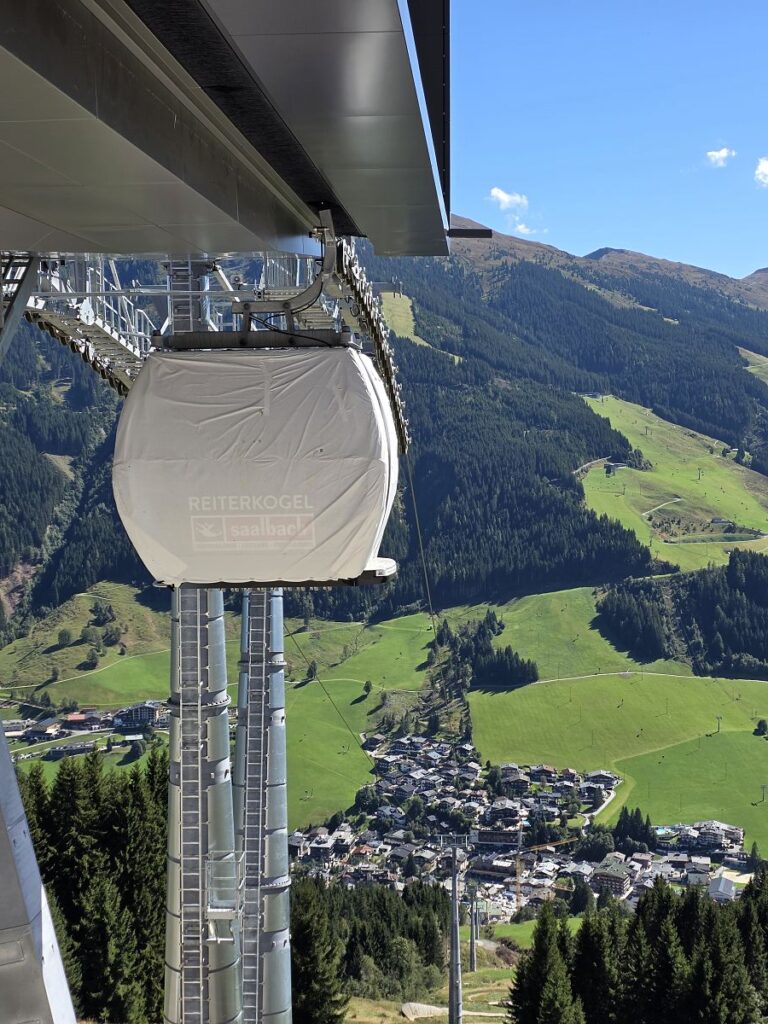
Construction began in April 2026. In an update dated 8 October, the operator said all three stations were in place and the principal ropeway installation work was largely complete. The cable had been pulled and spliced, while the first of the cabins were being delivered and fitted. The next planned stage was testing and empty trial runs in November, ahead of carrying passengers.
That sequence matters for anyone booking a trip around the opening weekend. A published target date is not the same as final confirmation that the lift has passed commissioning and is open to the public. Mountain weather, snow conditions and operational checks can also affect which lifts and pistes are available on a particular day.
How the new link fits into the Skicircus
Reiterkogel forms part of the Skicircus Saalbach Hinterglemm Leogang Fieberbrunn, a linked ski area across several villages and mountain sectors. The destination advertises 270 kilometres of pistes and 70 lifts for the 2026/27 season. The new gondola changes a specific approach to the Reiterkogel sector; it does not add an equivalent distance of new pistes or remove the need to plan routes between different parts of the Skicircus.
For skiers based in central Hinterglemm, the most practical benefit should be the ability to board close to the village and travel directly to the upper Reiterkogel area. Groups with mixed experience may find the more direct ascent useful, although their choice of run should still determine where they ski next. The new lift is also intended for summer use, but the immediate timetable concerns its winter debut.
The wider 2026/27 programme includes other infrastructure work, notably snowmaking improvements at Leogang, as well as a new presentation of selected runs under the name MUST Rides. Those projects are separate from the Reiterkogelbahn. Travellers comparing different bases in the Skicircus should consider which sector they expect to ski most often rather than assuming one new gondola changes access equally from every village.
Opening date, season dates and ski passes
Saalbach’s official winter announcement gives 27 November 2026 as the intended start of the season and 4 April 2027 as its planned end, subject to change. The Reiterkogelbahn is scheduled to begin operating at the season’s start. Visitors arriving in late November should therefore verify the lift’s actual status shortly before travel, especially if riding it is central to their plans.
The official announcement does not identify a separate ski pass supplement for the new gondola. It would be premature to infer a particular ticket price from the construction details alone. Check the resort’s current ski pass information and lift operating reports when arranging travel, and confirm that the ticket selected covers the lifts and dates you intend to use.
The resort has separately announced a special EUR 50 anniversary-day ski pass for 19 December 2026, marking 50 years of the Skicircus. That is a dated anniversary offer, not the standard price of a day ticket and not a Reiterkogelbahn-specific fare. It should not be used to estimate the cost of an ordinary skiing day.
What this means for your trip
If you are staying in Hinterglemm for winter 2026/27, the new Reiterkogelbahn could make the journey from the village centre to the summit simpler, with a single two-section gondola route and a quoted ride of roughly nine minutes. Its 27 November opening remains a target until the operator confirms passenger service. Before setting out, check the current lift and piste reports, plan suitable descents from the upper station and consult the latest ski pass conditions. For a short visit, those operational details will matter more than the lift’s headline capacity.